
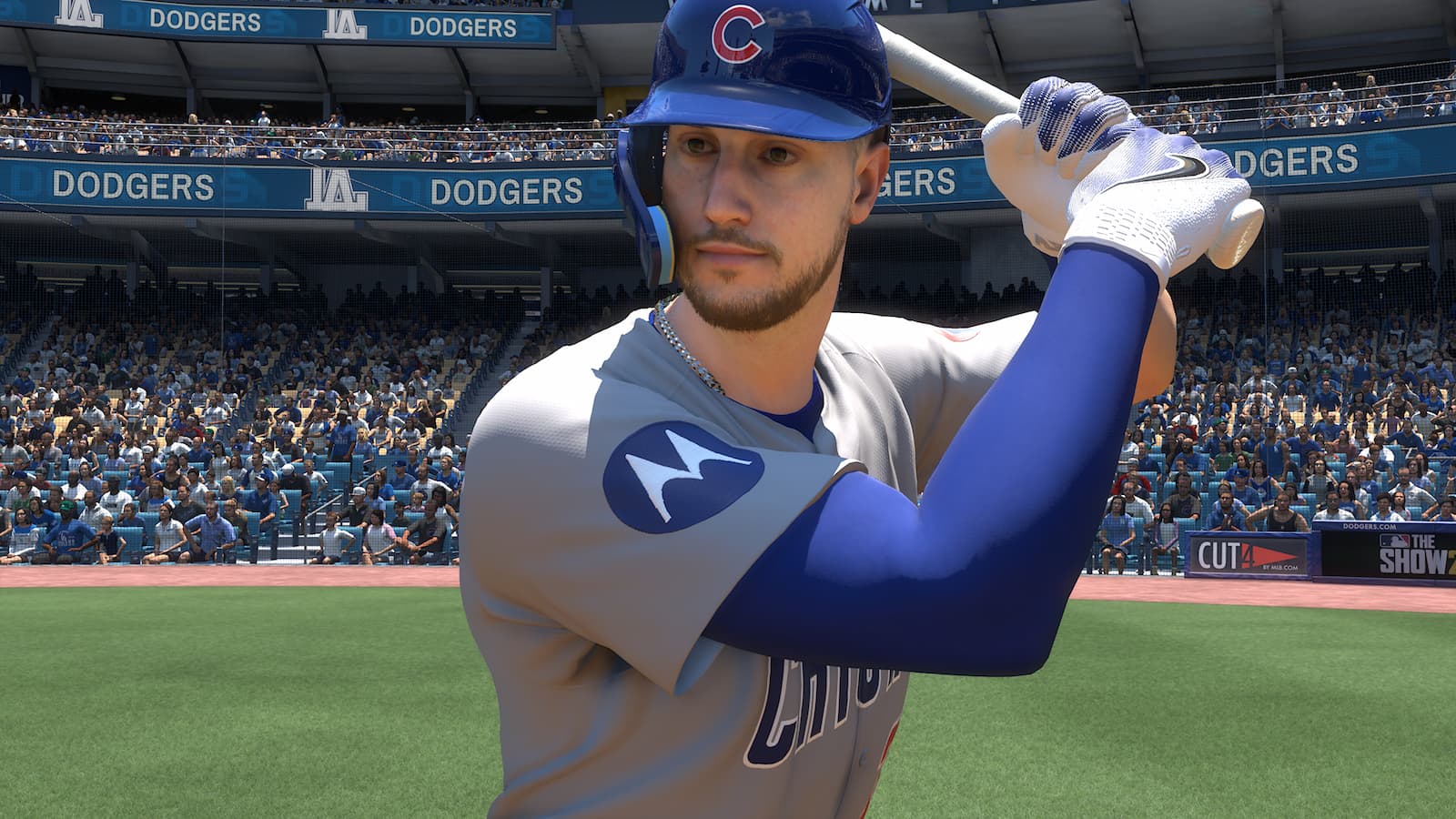
Sony San Diego introduced Parallels and PXP Points in MLB The Show 21. Parallels are back for MLB The Show 25. However, thanks to minor tweaks, plus the addition of new game modes within Diamond Dynasty, PXP works slightly different in The Show 25.
What are Parallels?
Parallels in MLB The Show 25 are special versions of a particular card in Diamond Dynasty. A Parallel is earned on a card based upon the usage of said item.
How Levels Work
There are five levels to Parallels in MLB The Show 25. Here are the PXP thresholds for each level in Diamond Dynasty.
- Parallel I: 500
- Parallel II: 1,000
- Parallel III: 2,000
- Parallel IV: 4,000
- Parallel V: 8,000
This level layout is the same as MLB The Show 24. Last year, Sony San Diego introduced a reduction in requirements to get to Parallel V.

So, what does each level do? Well, for one, there’s a cosmetic change. Parallel I cards will have a green marker on their sides. Parallel II (orange), III (purple), IV (red), and V (superfractor) have their unique design changes, as well.
But more importantly, each Parallel will move up a card’s attributes by one. For example, a card with 90 Contact vs. RHP will get a +1 to 91 at Parallel I. At Parallel V, that 90 attribute will move +5, to 95.
How PXP is calculated
PXP is calculated based on several factors. Those factors are online & single-player usage, the difficulty, plus the different amount of stats that contribute towards a card’s Parallel status.
Let’s start with online & single-player. Any stats earned on a card in single-player will count towards a Parallel on a 1.0x basis. This means that one plate appearance (15 PXP) will count exactly as 15 PXP (15 x 1.0) in single-player mode. But in online play, that multiplier is moved up to 1.5x.
Single-player modes include Conquest, Mini Seasons, Play vs. CPU, Unranked Co-op, and Diamond Quest. Online multiplayer modes include Ranked Seasons, Battle Royale, Ranked co-op, Events, and Weekend Classic.
New to MLB The Show 25, co-op stats will now stack on to a card’s Parallel progress.
Second, the difficulty matters, as well. Here are the multipliers, based on difficulty:
- Rookie: 1
- Veteran: 1.1
- All-Star: 1.2
- Hall of Fame: 1.35
- Legend: 1.5
- G.O.A.T.: 1.65
The higher the difficulty, the more PXP will be awarded.
Third, each stat has its impact. Here’s a look at the bonuses, per stat, for hitters:
- 5 PXP: RBI, Stolen Base, Walk, Single, Run Scored
- 10 PXP: Double
- 15 PXP: Plate Appearance
- 20 PXP: Triple, Home Run
SDS tweaked these bonuses slightly for 25. Last year, a plate appearance offered 10 PXP. Now, it’s 15, with no multipliers taken into account.
And for pitchers:
- 10 PXP: Quality Start, Strikeout
- 20 PXP: Save, Win
- 25 PXP: Complete Game, Shutout
- 40 PXP: Inning Pitched
Check out our guide to Diamond Quest in MLB The Show 25.