
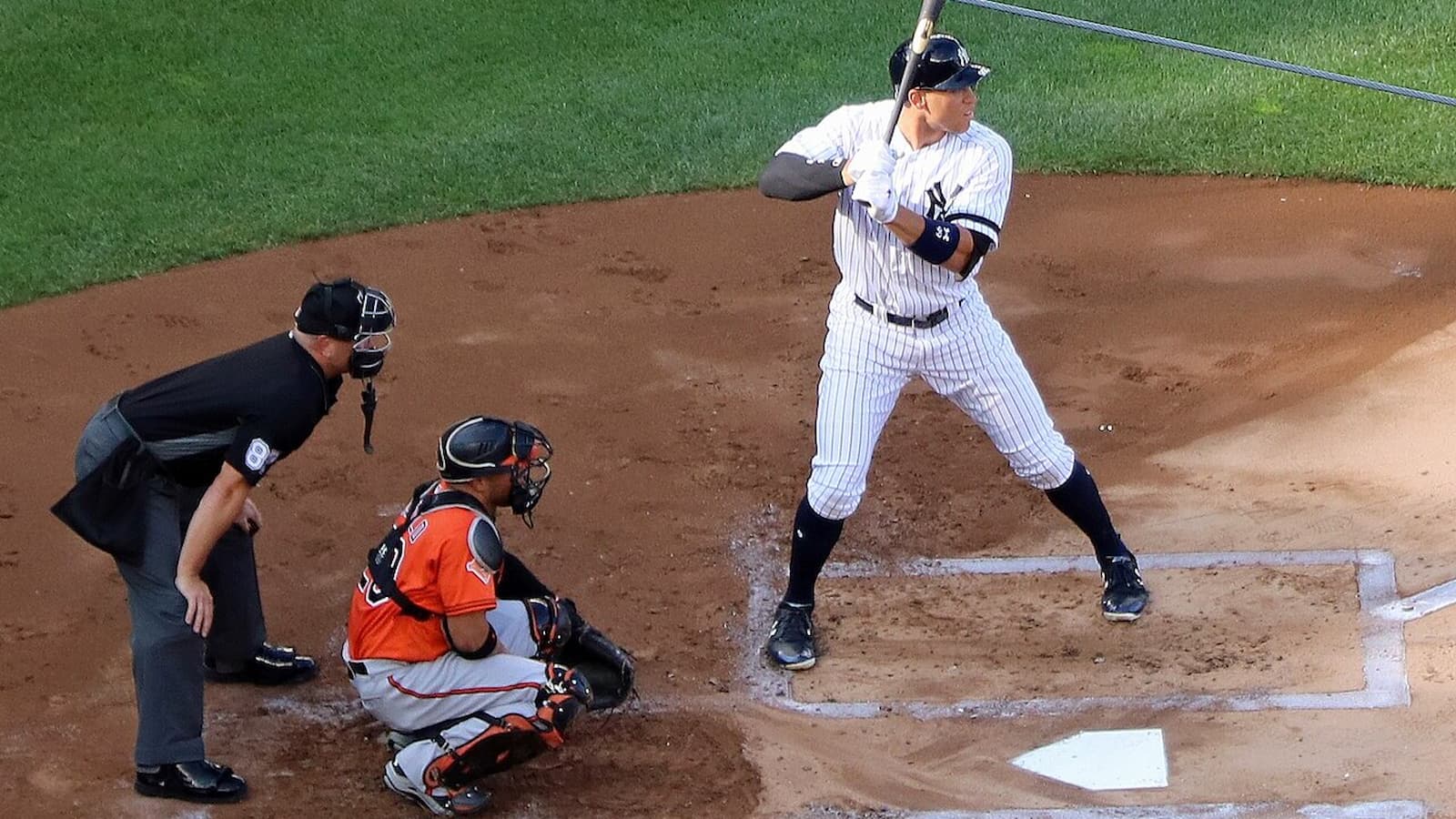
MLB fans got a taste of the automated balls & strikes (ABS) system during Spring Training 2025. Now, it’ll be coming to regular-season and postseason games in 2026. The league announced on September 23 that the ABS system has been approved for those contests, allowing players to challenge balls and strikes.
How the ABS system will work
Per Major League Baseball, 12 Hawk-Eye cameras will be set up along the field to track the location of each pitch. T-Mobile will run the system of ABS.
According to the league, the pitch will be called a strike if it touches any part of the zone.
The definition of the strike zone, per MLB, is a two-dimensional rectangle in which the middle is set on the middle of home plate. The width of the zone is 17 inches, with the edges set at the ends of home plate.
Commissioner Rob Manfred stated in January that human umpires tend to have an oval-shaped strike zone.
As for the height, it’ll depend on the height of each player. It consists of 53.5% of the player’s height at the top, and 27% at the bottom. For those unaware, players like Aaron Judge and Jose Altuve will have considerably different strike zones.
The league stated that, like in 2025 during Spring Training, players will be measured to ensure accuracy of the system.
Rules for challenging pitches
Should a hitter, pitcher, or catcher disagree with the call, that individual can tap their head to call for a challenge. This decision must be made immediately upon the ball/strike call. No input from the coaching staff will be allowed.
Should a team be successful, that challenge would be retained. If not, it’ll cost the team one challenge.
MLB teams will start with two challenges. Each team will be granted one extra challenge per extra inning, should none be left.
Check out more of our MLB coverage.