
With the 2026 MLB Draft approaching, we’re taking a look at what happened 10 years earlier.
The 2016 MLB Draft is a perfect example of illustrating just how hard it can be to nail down evaluations of prospective pro talent. Looking back a decade later, there’s no doubt that it was a deep draft. After all, it produced many All-Stars, two Cy Young Award winners, and a plethora of talent. However, almost all of those players were outside the top round.
The big guns
Heading into the 2016 high school & college seasons, the two players who were expected to go first overall were A.J. Puk and Jay Groome.
Puk was a late-round pick by the Detroit Tigers in 2013 out of high school. A very good high-school product out of Iowa, Puk was never expected to go pro. Instead, he went to the University of Florida, and he starred in a deep rotation constructed by Kevin O’Sullivan.
In his sophomore season back in 2015, Puk struck out 104 over 78 innings for the Gators as the staff ace. A towering lefty with a power fastball & slider, Puk had the size, makeup, and stuff that was believed to make him a future ace.
Groome, meanwhile, was a monster among teenagers out of Barnegat (NJ), located right on the Jersey Shore — notable as the Phillies held the first overall pick. A towering lefty in his own right, Groome was believed to have elite power stuff. But he also had a strong commitment to Tim Corbin’s Vanderbilt.
Over the last decade, Corbin did a strong job of recruiting in New Jersey, a high school hotbed for talent. Notable commits over from 2016 onward included Groome, Chris Maldonado, Anthony Volpe (did not go), and Jack Leiter.
He wasn’t the only notable Northeast-region prospect to be a big-name prospect. Ian Anderson was set to follow Garrett Whitley as a Capital Region first-rounder, as he dominated as a high school pitcher in upstate New York.
Aside from those there, there were other potential options to go first overall. Nick Senzel didn’t put up sexy power numbers but he hit .354 in his junior season with the Tennessee Volunteers. Kyle Lewis, from Mercer University, hit so well in a mid-major conference that he won the 2016 Golden Spikes Award.
However, none of those players went first overall to the Phillies.
Phillies bet on Moniak
The Phillies needed to hit a home run in 2016, figuratively, of course.
For years, the Phillies were a dominant team that ran through the National League. That run resulted in five consecutive NL East titles, two NL pennants, and a championship in 2008. But by 2012, the core led by Jimmy Rollins, Cole Hamels, Ryan Howard, and Chase Utley began to age out. And by 2015, Rollins, Hamels, & Utley were gone.
Philadelphia, led by Andy MacPhail and Matt Klentak, began to load up on assets. The Phillies drafted Aaron Nola & Rhys Hoskins in 2014, then bet that Cornelius Randolph would develop into a power-hitting outfielder in 2015. But to win the 2016 Draft, the Phillies opted to draft Mickey Moniak, securing him to a below-slot deal that would save the team money for other prospects.

By getting Moniak to a $6.1MM below-slot deal, the Phillies were able to sign two additional prospects to seven-figure bonus deals. However, neither of those two other prospects — Kevin Gowdy and Cole Stobbe — made it.
The Phillies did hit with fourth- and fifth-round picks, as the team selected JoJo Romero and Cole Irvin. Both turned into valuable MLB pitchers. However, neither had significant contributions to the organization.
As for Moniak, he struggled to find that power stroke. Before 2021, his career-most in home runs for one season was 11 in a hitter-friendly Reading ballpark. Ultimately, the organization shipped him off to the Angels in 2022.
Moniak turned into a good platoon hitter in 2023. However, the Angels cut him before the 2025 season, and he ultimately landed in Colorado. Turns out, all he needed was to go to a place where his plus bat speed could thrive. Moniak hit 38 home runs over his first year and a half with the Rockies.
The rest of the first
Overall, the 2016 first round produced good Major League talent. However, it took a while for some to crack through.
Nick Senzel, the second overall pick by the Reds, spent several seasons in the Majors but, as of 2026, had a career bWAR of -3.1. Ian Anderson, taken third overall, wound up helping the Braves win the 2021 World Series. Despite his command problems afterwards, that alone justified the pick.

The top five was rounded out by two now-retired players: Riley Pint and Corey Ray. Pint, a live arm from the Midwest, originally retired in 2021 but came out shortly thereafter and eventually pitched in parts of two seasons. Ray, a standout at Louisville, wound up playing one game at the MLB level. He would eventually become the first-base coach for the Nationals.
Puk slipped to #6, as the lefty wound up being taken by the Athletics. Teams generally don’t draft for need but the A’s, at the time, desperately needed pitching depth. Oakland took three college pitchers in that round, as Daulton Jeffries (1C) and fellow Gator Logan Shore (2) were also taken.
He didn’t find significant success as a starter. But Puk, with that aforementioned fastball/slider combo, found it as a reliever.
There were plenty of other players taken in the first who wound up developing into serviceable Major Leaguers. Eric Lauer, Braxton Garrett, Josh Lowe, Cal Quantrill, Dakota Hudson, and Dane Dunning were among that group. And Cole Ragans, taken 30th overall by Texas, turned in perhaps the best single-season performance when he finished fourth in the AL Cy Young vote in 2024.
But in terms of bWAR, only two first-rounders had figures of 9.0 or greater. One was Nick Lodolo, then a high schooler who didn’t sign with the Pirates. Instead, he went to TCU, improved his draft stock, and was taken 34 spots higher three years later.
The other was Will Smith, who broke out in 2016 and turned into a three-time All-Star. Not too shabby for the 32nd pick.
Which picks busted?
While the 2016 MLB Draft didn’t produce the star power that the 2015 one did, only five players from the first round 10 years ago didn’t make it to the Majors. The highest pick not to do was Jay Groome. The other five were Delvin Perez (23rd, Cardinals), Hudson Potts (24th, Padres), Robert Tyler (38th, Rockies), and Anfernee Grier (39th, D-Backs).
Groome had one of the more interesting stories. The Red Sox snatched Groome up at #12, and he was pushed fairly hard right away. By the end of the year, he was already pitching against college-age hitters in the New York-Penn League.
However, injuries set back significantly. And in 2024, Groome was suspended along with several others for betting infractions.
The second round, meanwhile, had significantly more misses. Sixteen second-rounders never made it. Arguably, the most notable of that bunch was Kevin Gowdy, one of the best upside pitchers in the draft at that time. Gowdy signed for $3.5MM, as he was given first-round money used from the savings the Phillies picked up from Moniak.
However, the talent outside the first round wound up beating the first-rounders.
Stars outside the first round
The only significant award winner among the first rounders was Smith. However, if you expand that list outside the top round, there were many superstars to be had. Three players with a 20+ bWAR were taken in the second round: Bryan Reynolds, Pete Alonso, and Bo Bichette.
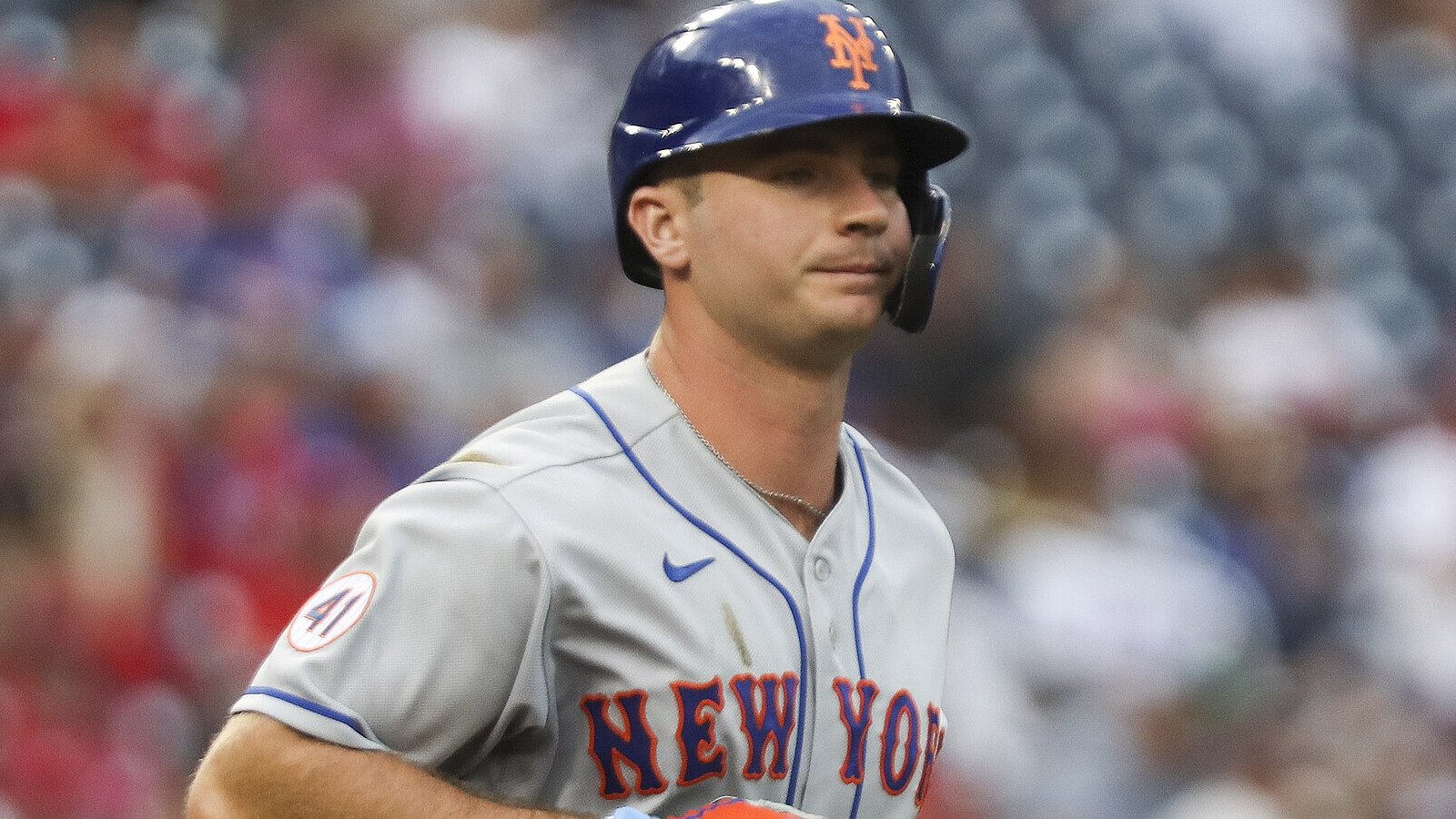
Reynolds turned into an All-Star after a successful career with Vandy. Alonso, who suffered a hand injury in his junior season with Florida, overcame the RHH first base stereotype to become the Mets’ all-time home run king. And then there’s Bichette, a bloodline athlete who turned into one of the most productive middle infielders of the 2020s.

It didn’t stop there in the third round. Zac Gallen (Cardinals), Sean Murphy (Braves), and Austin Hays (Orioles) were among the former All-Stars grabbed in the third round. That round also featured Dustin May, Jesus Luzardo, and Aaron Civale taken.
But in what might have been the biggest fleeces of the 2016 MLB Draft, both the Brewers and the then-Indians picked eventual Cy Young winners in the fourth round. Corbin Burnes went 111th overall out of Saint Mary’s (CA). The Gaels also produced another MLB pitcher from that draft, as Tony Gonsolin was picked by the Dodgers in the ninth round.
And 11 picks after Burnes, Cleveland picked UC Santa Barbara ace Shane Bieber.
Best Late-Round Picks
There were some good grabs during the final 30 rounds. Bryan Baker (11th, Rockies), Dean Kremer (14th, Dodgers), John Schreiber (15th, Tigers), and Anthony Bender (20th, Royals) all turned into valuable big-leaguers.
However, there were notable standouts taken from the 11th round onward:
| Name | Round | Team | bWAR |
|---|---|---|---|
| Michael King | 12 | Marlins | 12.8 |
| Nathaniel Lowe | 13 | Rays | 12.9 |
| David Bednar | 35 | Padres | 7.7 |
Michael King was plucked out of Boston College in the 12th round in 2016. One year later, Miami shipped him to the Yankees in exchange for Caleb Smith and Garrett Cooper. While Cooper and Smith both contributed to Miami, King turned out to be the prize. First, as a reliever, and then as a starter for the Padres.
Nathaniel Lowe hit .348 as the first baseman for Mississippi State in 2016, and slowly pushed his way to the Majors. Eventually, he was traded to Texas, where he developed into a key piece for the Rangers’ 2023 title team.
And David Bednar, one decade later, is one of baseball’s best relievers.
Which teams did the best?
Lots of contenders for this title. The Mets grabbed a star slugger, while the Indians picked up two pitchers who provided plenty of value. However, the Dodgers laid a foundation in 2016, which set the stage for three World Series titles.
Smith, May, and Gonsolin all contributed to the Dodgers’ 2020 championship team. And four years later, Smith would win another title with Los Angeles. One year later, he wound up hitting, arguably, the most significant home run he’ll ever hit. Oddly enough, that was also off a 2016 draft pick (Bieber).
Additionally, the Dodgers drafted three other notables: Zach McKinstry (33rd), Bailey Ober (23rd), and Graham Ashcraft (12th). McKinstry wound up signing with the team, while Ashcraft and Ober did not.
Check out more of our MLB coverage.