
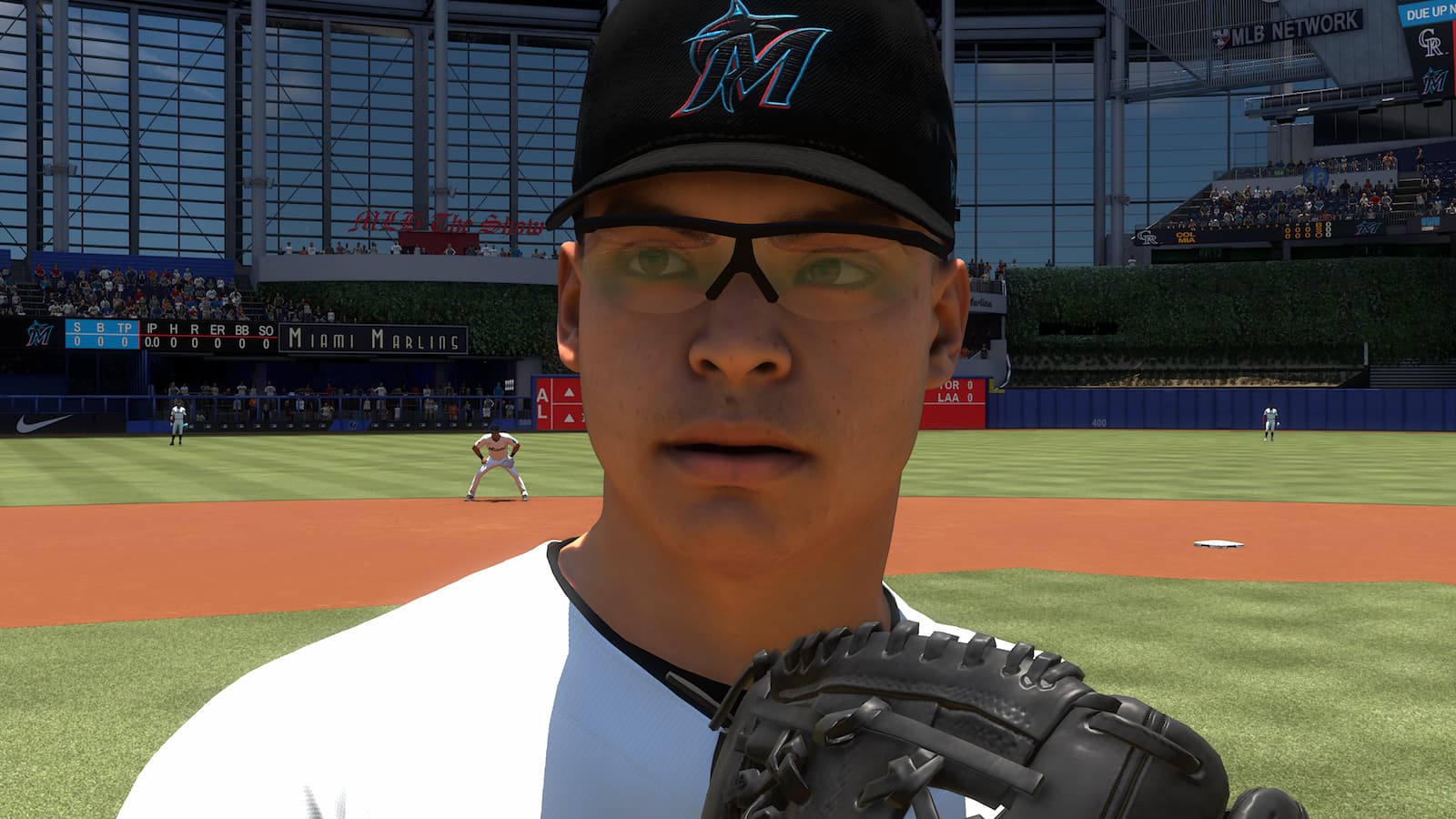
While the MLB The Show 24 lifecycle isn’t done just yet, it’s not too early to start thinking about 2025. This past year’s game, in my opinion, was a missed opportunity for the franchise. It lacked depth in its single-player gameplay modes and Diamond Dynasty felt its worse since the move to the Xbox family of consoles. With that said, what would be good ideas to improve for The Show 25? Here’s a look at my MLB The Show 25 wishlist.
A Revamped Road to the Show
I’m going to start with Road to the Show (RTTS), a mode that’s not as poor compared to other single-player, role-playing career modes in sports games. But, it needs a lot of changes, both on the immersion side and how progression works.
One of the big pet peeves I had for MLB The Show 24 — which I went into more detail in my review for Dexerto this year — was that it felt bare bones with regards to progression up the ladder. Look, this is the only major sport of the “Big 4” and their flagship video games that has a complex minor league system. One would like to think that would be reflective in RTTS. Unfortunately, no dice.
Much like past years, Road to the Show players are thrust into Double-A from the onset and off to the usual grind.
Now, there were some changes in RTTS for ’24. For those unaware, MLB The Show 24 saw the addition of the MLB Combine — or re-addition, since there was a combine in older games from the 2010s — and a storyline dialog system with an agent.
Honestly, I could do without all the needless dialog and unncessary cutscenes. What I would like to see on the immersion front, specifically, is the addition of the lower-level Minor League systems and the ability to come from either high school or college.
Now, it is important to note that this is simply my MLB The Show 25 wishlist. I understand the complexities of adding in real-life universities, with team logos and likenesses and such. But, I don’t believe adding in the option to come out of either high school or college is so far-fetched.
Adding in this opportunity should give players the option to be a polished, refined college star like Paul Skenes, or a high school prospect with high potential but a low floor. Which, can be reflected with starting attributes.

The mention of attributes gets me to my next gripe: why are Archetypes even a thing in MLB The Show anymore? I understood the need for set archetypes in MLB The Show 21-23, back when Ballplayer in Diamond Dynasty was a thing. Archetypes made it so that a create-a-player (CAP) was balanced for online purposes. However, that’s no longer necessary, provided CAPs don’t return to Diamond Dynasty.
Why not give RTTS players the opportunity to create a custom build, much like NBA 2K? Every MLB player is different, so why not try to replicate that in Road to the Show?
Major Overhaul to Franchise
Over the past year, I’ve sunken many hours into Out of the Park Baseball (OOTP). Part of the reason is why while its simulation isn’t perfect, OOTP offers a significantly deeper experience.
MLB The Show franchise logic isn’t as bad compared to three or four years ago, when some players on social media found players on roster at 100 years old. But, it’s still easy to finesse the system on trades.

I understand Franchise Mode might not be considered a top priority. On the other hand, it needs real changes to the trade logic.
Aside from that, I would like to see more immersion to Franchise Mode. Give players an international posting system, rather than stuffing Japanese-born players — who traditionally enter the league via free agency — in the MLB Draft.
I could go on and on about Franchise — but I’m not.
Gameplay Changes
MLB The Show 24’s gameplay isn’t bad. The issue I primarily had is that it didn’t feel all that different from 23. Perhaps that should have been expected, as SDS didn’t advertise much in the way of changes for 24. The developers stated before 24’s release that they believed hitting balance was fine, and that additional fielding animations, including improved logic, were among the focus.
I didn’t feel too much in the way of change on the logic side, to be honest. However, one welcome change was the different Pinpoint gestures for the sinker, as well as different ones for left and right-handed pitchers. It made meta pitches tougher to execute, even though the new motions weren’t hard to master.
Assuming the engine remains the same, one aspect I would like to see is a cutdown on the ability to get on pitches out of the zone. Far too often, especially at Hall of Fame difficulty, it felt too easy to get around and barrel up balls outside. Perhaps a reduction in Vision, after the inclusion of Dynamic PCI range in MLB The Show 22, out of the zone is in order.
Sets and Seasons Should Go

Now, let’s get into the low-hanging fruit: Sets and Seasons.
I understand the rationale behind why SDS went forwards with Sets and Seasons. The developers stated before MLB 23 that the team wanted to create diversity between teams. And, there is an argument that this system is beneficial to “lapsed” Diamond Dynasty players, who don’t grind in one Season but have time in another.
But honestly, neither argument makes sense.
One, a meta will always arise, no matter what cards exist. Many will look for the big pitchers with Outlier four-seamers or meta arsenals (i.e. cutter, sinker, slider, changeup). And as somone who played a lot in the 700s and 800s in Diamond Dynasty, those pitchers were eveywhere, regardless of season. And for those who argue on the diversity side, you don’t need SDS to hold your hand to change up the roster.
Second, I don’t believe the lapsed players benefitted at all. Just look at what SDS did in July 2022 when the All-Stars of the Franchises were released. Anyone who just started Diamond Dynasty at that time could get high-90s cards just from the featured program path and have a strong team without needing to grind any of the old programs.
The reality is that Sets and Seasons didn’t do anything it was supposed to accomplish. And, it was frustrating to spend months to unlock a Season XP Path boss just to put it to the side a few weeks later.
Going back to the pre-MLB The Show 23 solves several problems. It means more 99 OVR cards at the end of the year and more team diversity, especially at the beginning of the year. With a limited legend pool, it’s hard to come up with three seasons of interesting content that will keep players engaged.
Make sure to check out more of our gaming covering, including our Backyard Baseball ’97 (2024) review.