
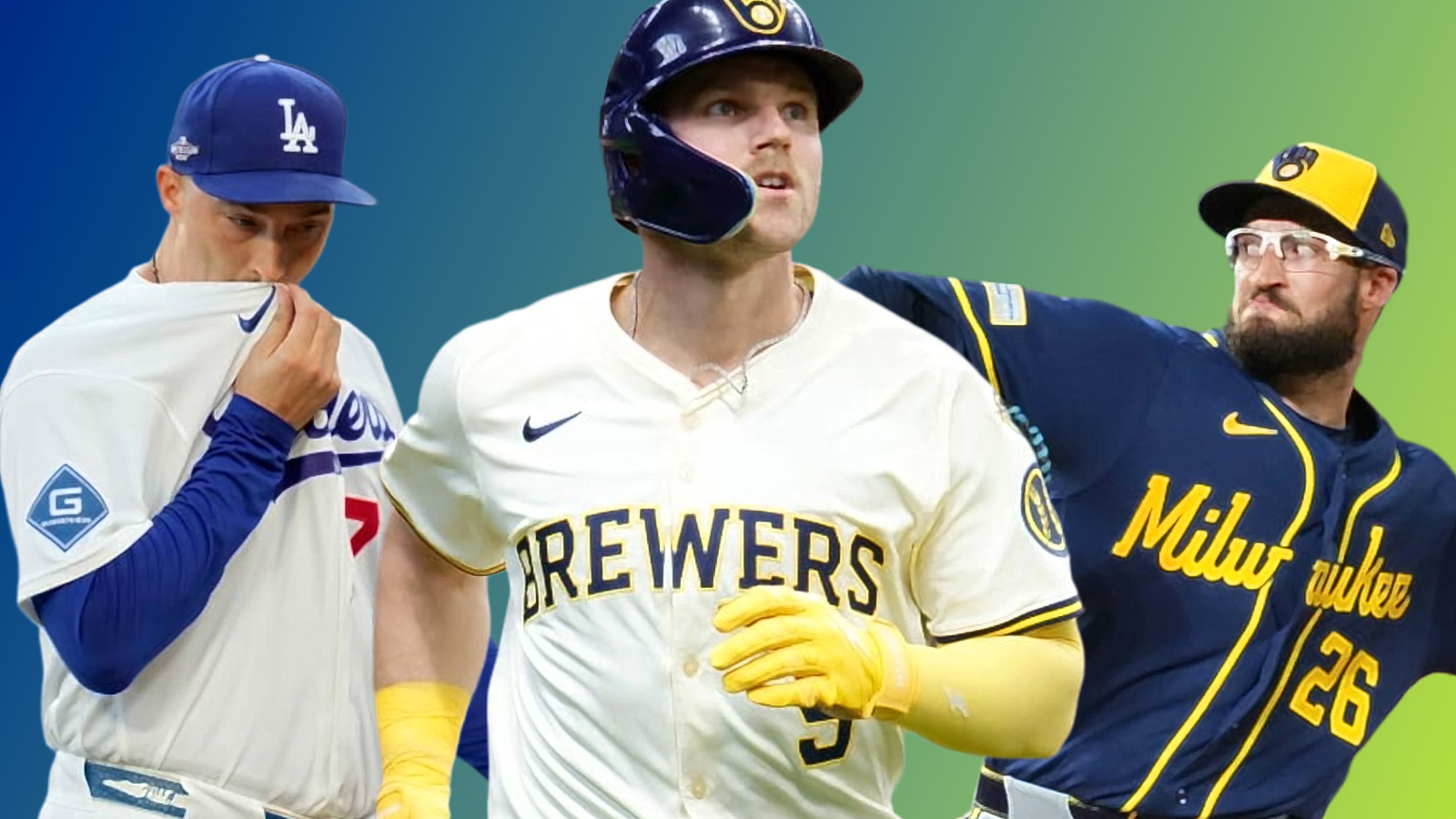
There will be a new World Series champion in 2026, as the Dodgers’ quest for a three-peat ended on October 15. Milwaukee, after years of heartbreak, broke through under manager Par Murphy and has a chance to end the city’s lengthy World Series championship drought.
The Brewers broke through
If there’s one thing that Jake Bauers‘ 11-pitch at-bat in Game 3, which resulted in a home run that flipped things around completely for the Dodgers, proved, it’s that this Brewers team has a modus operandi that works. And it’s this: grind, grind, and grind some more.
Throughout the year, whether it was early in the year, September, or October, the Brewers had a knack for finding holes at the plate and working with what’s given by pitchers.
It was a breakthrough series for both Bauers and Garrett Mitchell, both former top prospects who’ve blossomed into household names in Milwaukee. Jackson Chourio continued to come through in clutch spots, including in Game 3 when he ambushed a first pitch from Blake Snell for a home run.
Fielding, another strong suit for the Brewers, nearly collapsed the club in Game 2. But again, the Brewers found a way.
But where the Brewers truly shined was the bullpen. Relievers won all four games for Milwaukee, and their bullpen struck out 22 over 21, all while posting a 2.08 ERA. Aside from Bauers, reliever Aaron Ashby may have been the most valuable player for the club in the four-game sweep.
What went wrong for the Dodgers
It’s hard to state that the pitching, starting pitching in particular, was a fault for the Dodgers. As a matter of fact, the Dodgers’ pitching work was very good overall during the NLCS.
As of October 16, the Dodgers’ team pitching staff had a cumulative Whiff% of 30.4%, just slightly ahead of the Guardians (30.3%). That was the best in the Championship Series as of this writing, although that could certainly change depending on what happens between Cleveland and Tampa Bay.
Tarik Skubal, the mercenary brought in to help the Dodgers vanquish the Brewers and every other NL postseason team in August, had a Whiff% of over 34% in Game 1. Two games later, Blake Snell had a Whiff% over 40%. Say what you want about the Dodgers but the pitching was not the issue.
What cost the Dodgers was the fact that the offense did not produce, notable given the many stars that occupied space in the Los Angeles lineup.
Mookie Betts went 2-for-15. Freddie Freeman batted .071. Shohei Ohtani hit the only home run for the Dodgers in the series but only went 3-for-13 and looked uncomfortable throughout the series, particularly against left-handed pitching. Max Muncy and Will Smith also batted below .200.
No, the Brewers’ pitching staff didn’t elicit a ton of swing-and-miss. But Milwaukee’s arms kept Dodgers hitters guessing, and more often than not, beat them.
This series also proved exactly why no team has won three straight titles since 2000. It’s hard for all the moving parts in an ever-changing MLB landscape to align just right. Even though this Dodgers team may have had more talent on paper than the 2024 and 2025 clubs, that doesn’t guarantee success.
Changing the labor landscape?
It likely won’t change the fate of what happens in December. But it does offer a nice change in the discussion, doesn’t it?
By now, readers should know the deal with the looming labor stoppage. The current CBA is set to expire after November 2026, and payroll disparity and competitive balance have been at the forefront of Major League Baseball’s PR push to win over the public.
But now that the Brewers, a small-market team that’s won four straight NL Central titles and a World Series-bound club, have ousted the Dodgers, it does change the public’s look to a certain extent. Especially when taking into account that Milwaukee will face either the Rays or Guardians, both teams with low player payrolls.
Check out more of our MLB coverage.